The next meal can be ordinary.
When “I ruined today” shows up after eating, you do not need a stricter restart. Try a one-minute reset, then see the illustrated workbook that helps you practice it in everyday life.
A reflection tool for adults. No calorie targets, food bans, or promises about weight loss.
A small decision can interrupt the guilt loop.
What happened around the meal?
Choose a familiar situation. The prompts below are examples, not a verdict about what or how much you ate. Nothing you select is saved or sent anywhere.
Pick a moment
There is no “correct” choice. Choose the situation that feels closest.
This is educational self-reflection. If eating-related distress is frequent or severe, a qualified professional can offer more appropriate support.
A restaurant or social meal
- Step 1 · Notice“I ate more than I planned.”
What are you telling yourself about that moment?
- Step 2 · ContextWhat was happening around the meal?
Think about hunger, timing, company, and the reason you were there.
- Step 3 · Next choiceWhen is your next ordinary meal?
Notice what food is realistically available and what would make that meal manageable.
You can return to these questions without judging the meal.
Ask what a food rule leaves out.
Explore the thought loop, two diagrams, and a practical three-step reset in our food guilt guide.
Read the food guilt guide →Seeing claims about 150g of rice? Our visual rice-rule guide explains seven missing questions with three diagrams and links to the original Japanese lesson.
After a short night, food may feel more noticeable. Use the three-question sleep and appetite check-in to consider your day before making a stricter rule.
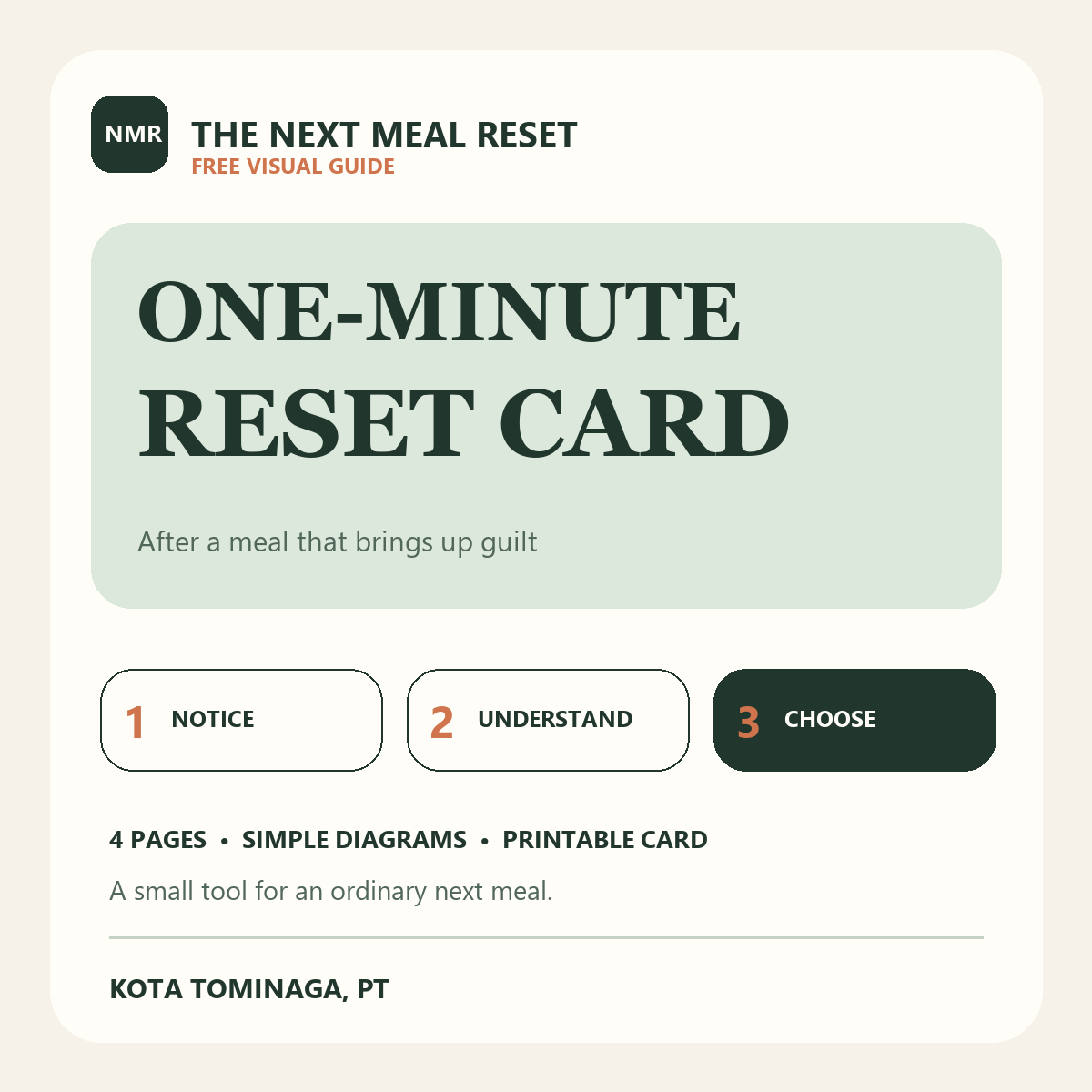
A free card for the next difficult meal.
Take the three questions with you. This four-page visual PDF includes a printable reflection card you can use after a meal brings up guilt.
Get the free four-page card ↗Payhip asks for an email address to deliver the free PDF. Marketing updates are a separate opt-in.
See the pattern. Practice the next choice.
Each of the 20 modules begins with a visual guide. One diagram maps a familiar thinking pattern; the next turns it into a small practical choice. The pages add examples, reflection questions, and a real-life experiment.
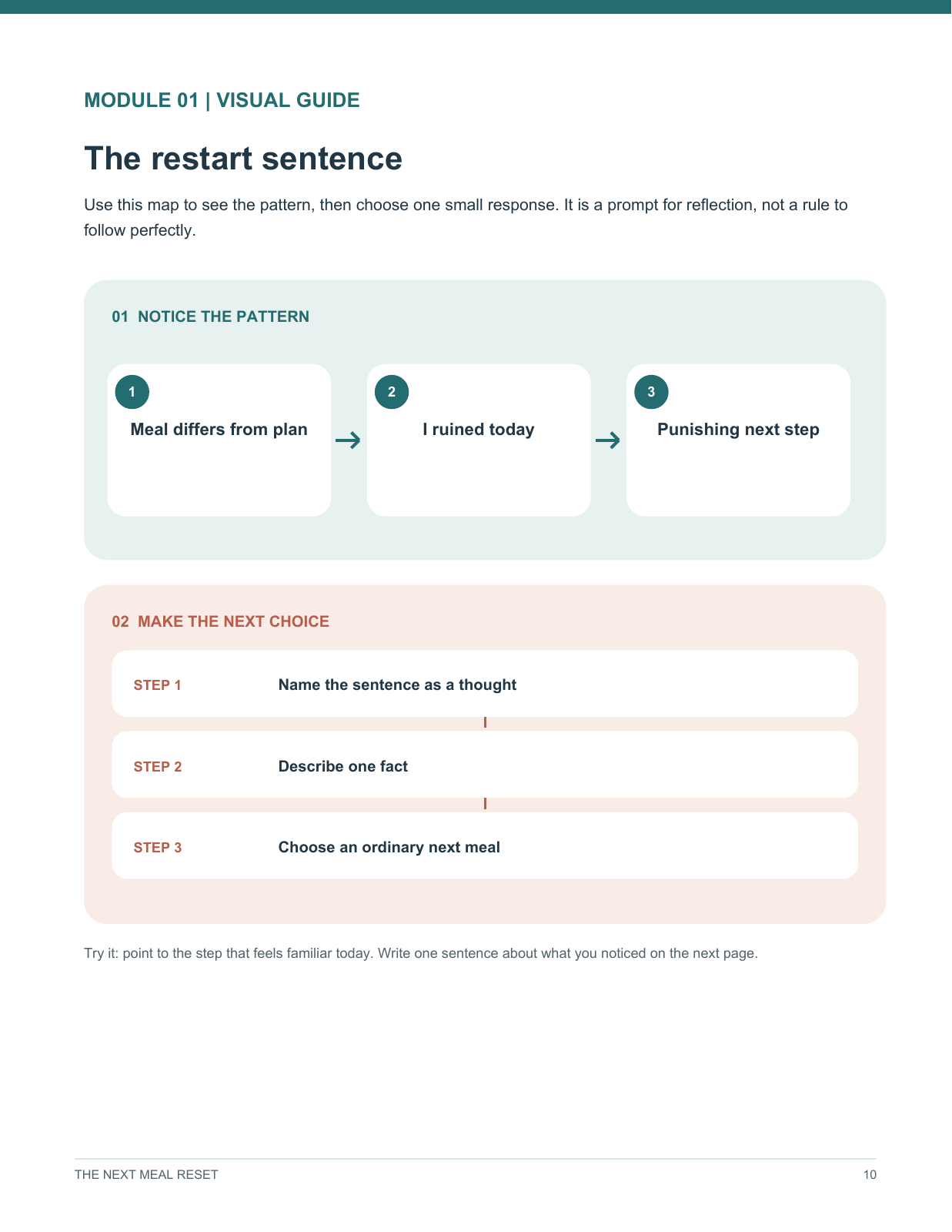
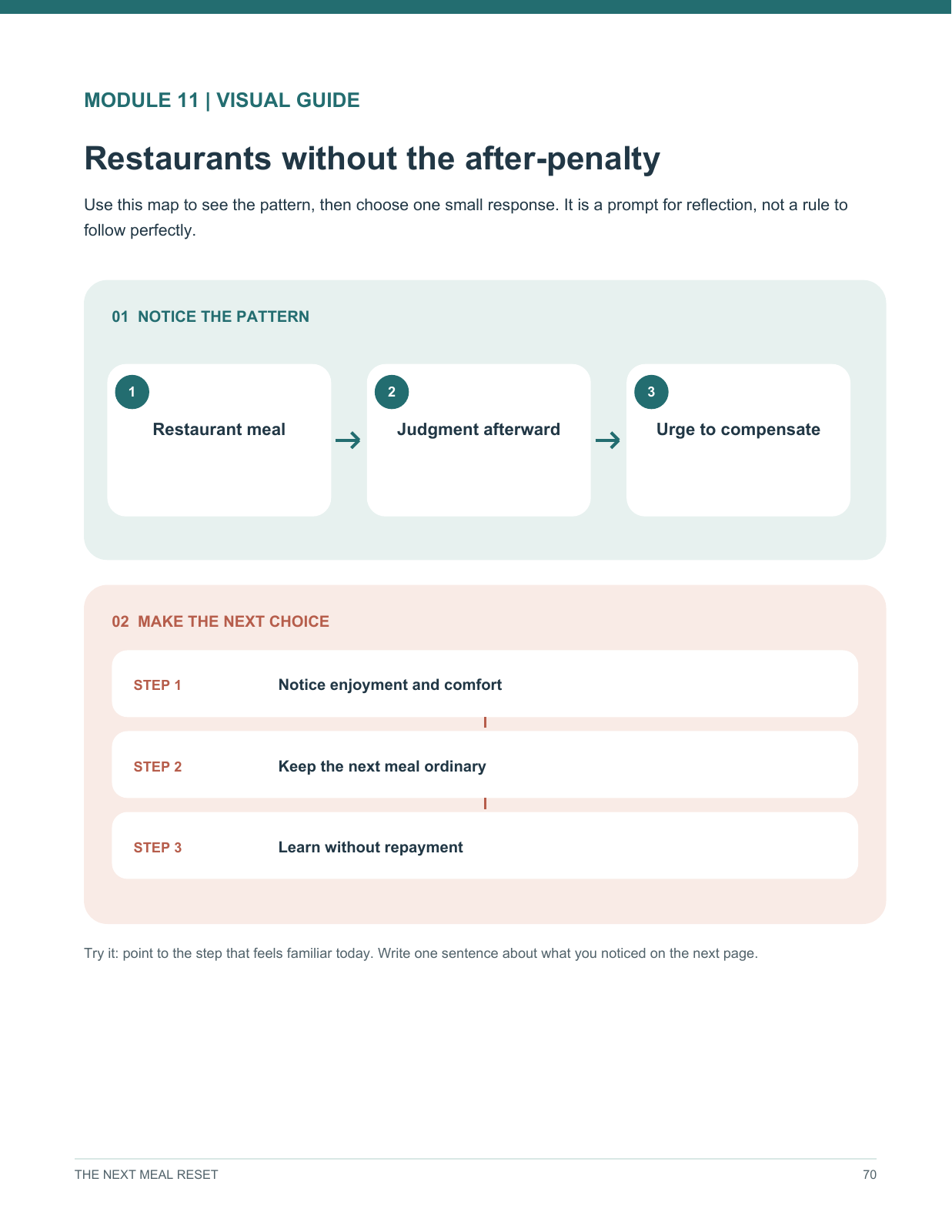
Start where your life is.
The suggested 30-day route moves through four phases, but you can open a chapter that fits today.
Notice
Recognize the guilt loop and the pressure to restart.
Understand
Read the context around meals, routines, and decisions.
Practice
Try flexibility in real situations, one choice at a time.
Continue
Build steadier habits without making every day a test.
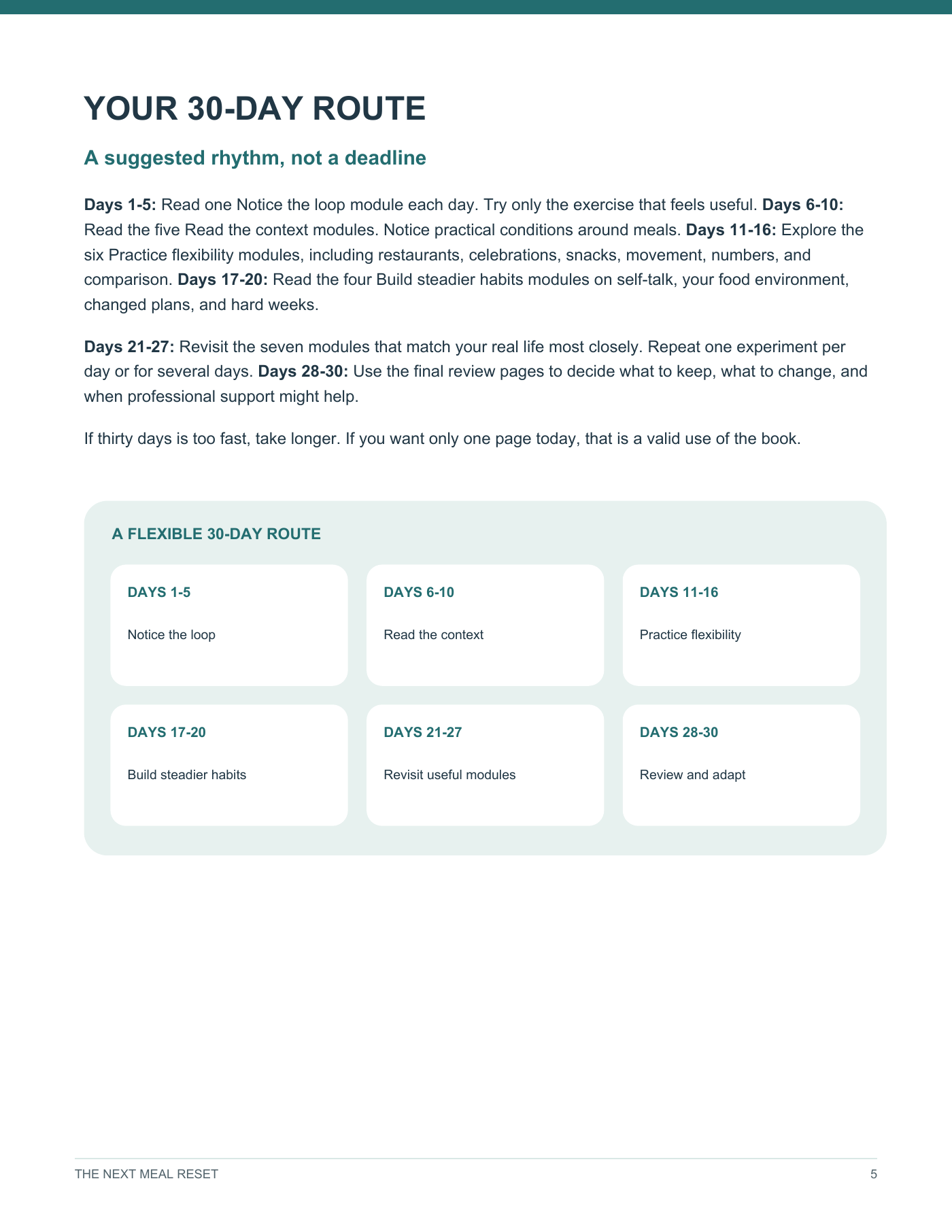
A page to return to when guilt returns.
Based on the approach of Kota Tominaga, a Japanese physical therapist. The English exercises and diagrams were newly developed for this workbook.
Instant digital PDF download through Payhip.
- 132 pages · US Letter size
- 20 modules, 40 diagrams, and 4 opening maps
- 120 reflection questions
- 20 small real-life experiments
- A flexible 30-day route
Preview 15 pages before you decide.
Before you begin.
Is this a meal plan or a weight-loss program?
No. It does not set calorie targets, ban foods, or promise weight loss. It is an illustrated self-reflection workbook about the thoughts and choices around meals.
Do I have to follow it for 30 days?
No. The 30-day route is a suggestion. You can work through modules in any order and return to pages that fit a particular situation.
What do I get when I buy it?
An instant digital PDF download through Payhip. It is 132 pages in US Letter size. There is no physical shipment.
Can this help with an eating disorder?
The workbook is not treatment and does not replace individualized nutrition or medical care. If eating-related distress is frequent or severe, seek support from a qualified professional.
Everyday reflection, without punishment.
The Next Meal Reset draws on Kota Tominaga's approach to appetite and eating behavior. Tominaga is a physical therapist in Japan. This English edition uses original exercises and diagrams to make the ideas usable in moments like busy days, restaurant meals, snacks, and travel.
Educational content only. This page and workbook are not a substitute for individualized medical, nutritional, or mental health care.